What is ‘the third thing?’
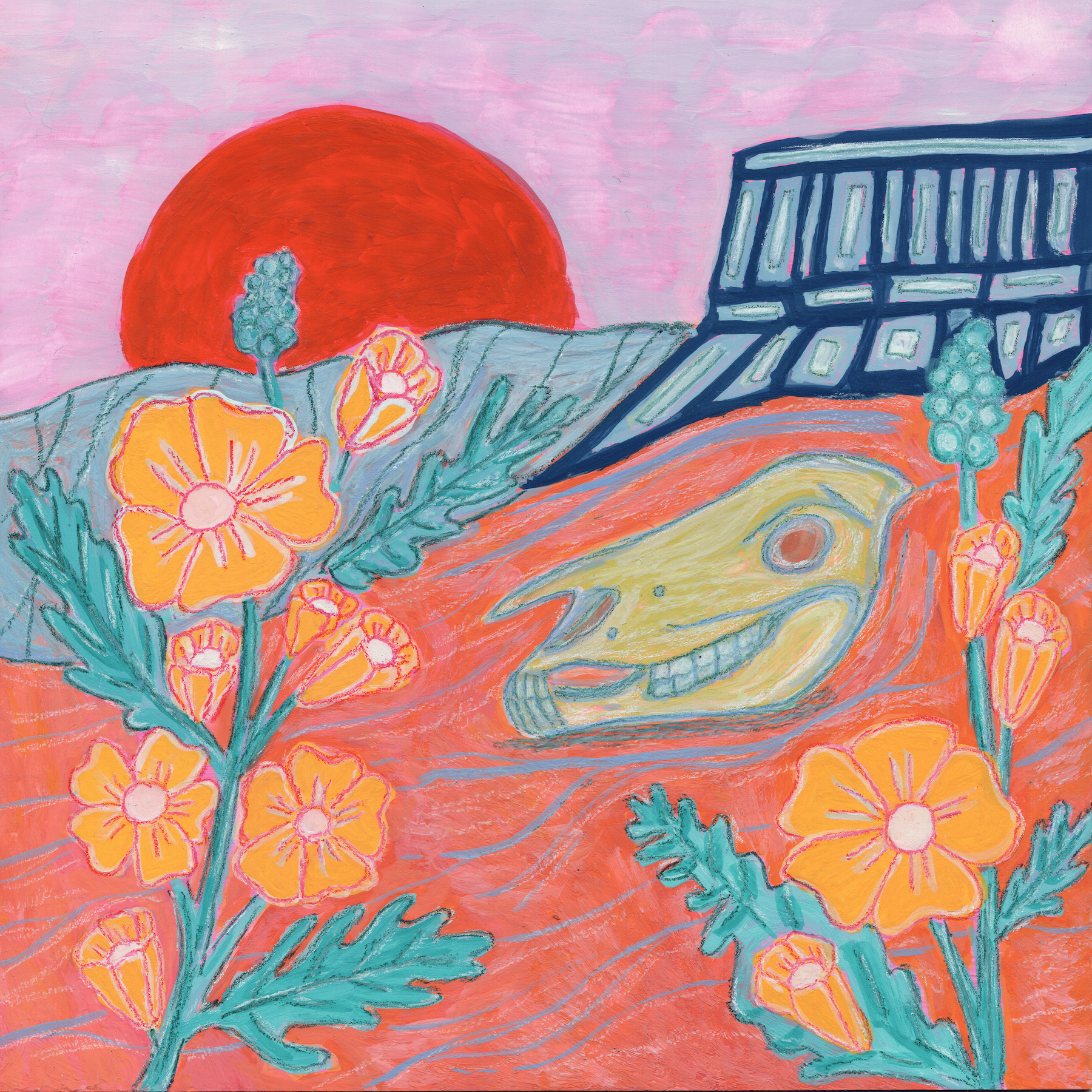
I’ve been working several art markets lately, and the number one question people are asking is, “What does 'The Third Thing’ mean? And so it is clear that I owe you an updated explanation:
The Third Thing is named after a D. H. Lawrence poem by the same name. In the poem, published in 1929, Lawrence says:
“Water is H2O, hydrogen two parts, oxygen one,
but there is also a third thing, that makes it water
and nobody knows what that is…”
I stumbled across this poem several years ago in the introduction to a book about water, waterways, and the way water moves through our environment. There is something in particular about water that makes this poem so salient. It wouldn’t quite be the same with, say, air, or a couch. As soon as I read it, it was an “aha” moment. Yes, THAT is what I want people to understand. I’m less interested in the comprehension of science, politics, or even history (though I do care about those things). Because to even introduce discernment of that third unknowable thing is to foundationally change one’s life.
What good is a conglomeration of facts without the underlying current of interminable mysticism? Why have facts at all without uncovering a “third thing” within them?
I am profoundly drawn to unknowability in a culture that seems so certain of itself. Of course one must be immensely intelligent to understand how hydrogen and oxygen molecules chemically bond to form water (I certainly do not have that intelligence. What even are molecular bonds? Cosmic glue? Ecumenical ether?). But one must also have a boundless fortitude of attention to sense that something else—an utterly unknowable something else—makes H2O water.
Where I lack raw, scientific intelligence, I make up for it with attention.
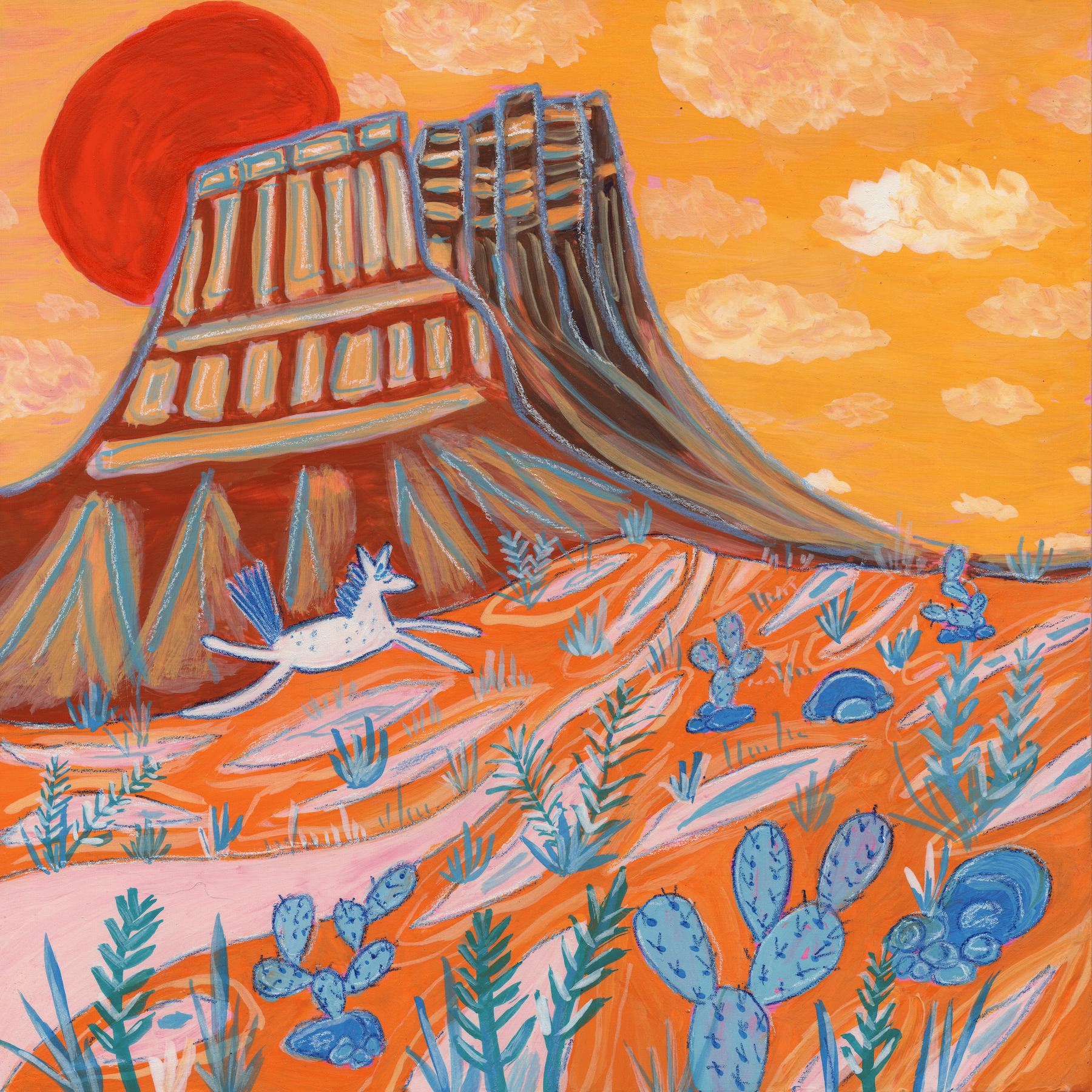
Perhaps this is why I find my career (and most jobs in general) so tedious. We spend long days sitting around our screens telling one another over and over again that water is two parts hydrogen, one part oxygen, and I am somewhere in the back of the room (with a copy of my annual review stating how difficult I am to work with) shouting, “OKAY FINE, BUT WHAT ABOUT THE THIRD THING THAT ACTUALLY MAKES IT WATER?”
I’ve always had my doubts about careers and desk jobs, but I am suddenly so fantastically uninterested in the atomized, reductive components of ANYTHING that it’s a wonder I can open Teams each morning with anything even resembling a straight face. I have no idea what a donor advised fund is, and I certainly don’t know why there is an error in our Google Analytics code. But I would like to know the moral and philosophical implications of why some people will lay their lives down for our planet, and others will lay their lives down for corporate profit. A study about that “third thing” is something you could sucker me into a Zoom meeting for.
Water—as Lawrence obviously understood—is perhaps the greatest example of a “third thing,” as it would be impossible for a human to go any meaningful part of their life without experiencing it in some tactile way. You can listen to a thousand lectures on molecular bonds and watch a hundred hours of videos of whales swimming through oceans, but it’s not until you sip a glass of water or submerge your body in a cool summer lake that you will come to see that water is made of something more than the sum of its literal parts.
The “third thing” is necessarily an experience. It can never be hallucinated into existence by AI or reduced to an algorithmic formulation. It is unlikely—unwilling even—to appear at a conference room table under the fluorescent glow of commodity or political production. Like a quantum system collapsing under observation, the spookiness of a “third thing” is that it arises simply from placing our attention somewhere deliberately into the real world.
But attention is an exploited resource. Corporations are relentless in their pursuit of our interiority. They are scraping the last dregs of our attention out from between our ribs, carving us up into parts, and reducing us to humiliating tags of data that can be bought and sold in a digital marketplace.
Without attention, third things cease to exist. Water reverts to a collection of molecules, and life degenerates into a series of optimization strategies to be tracked, measured, and ultimately capitalized into someone else’s profit.
What will happen when we regain control over our attention and withdraw it from corporate exploitation?
That is the question “The Third Thing” asks. When we pay attention, what “third things” can we initiate? What unknowables can we scoop out of the great celestial waves of the universe and give rise to?
Both my art and my writing created under the banner of “The Third Thing” are first and foremost an attempt to divest my attention from corporate greed, and re-invest it in my community. But this space is also built on a deep and abounding belief that meaning can only exist so long as there are unanswerable unknowns threading the fabric of our lives and that—thank god—some things will never be reducible to obvious, comprehensible units of production.