What Happens When Winter Never Arrives
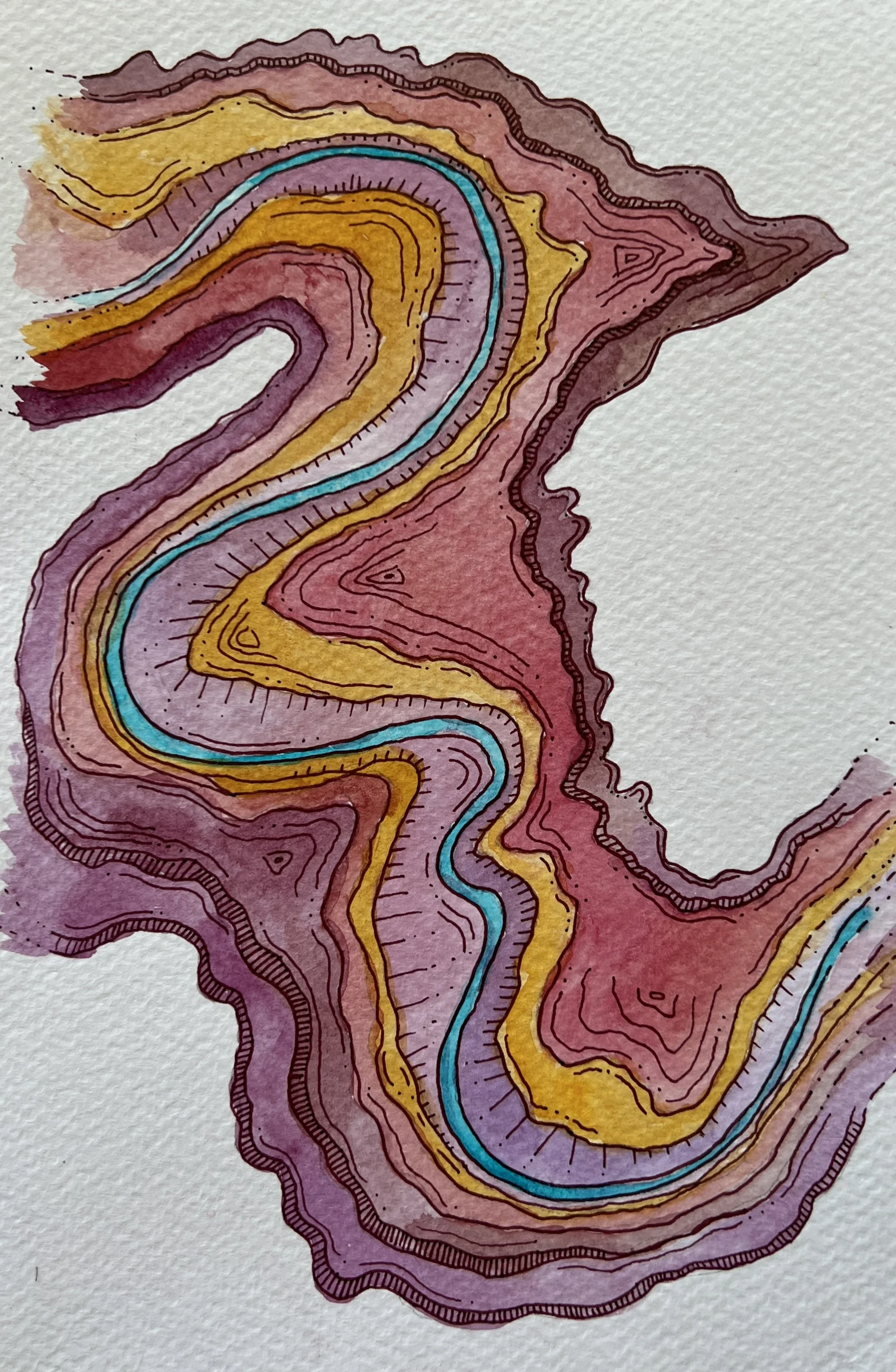
Watercolor illustration of the Colorado River
Tuesday night the winds blew in. The neighbor’s wind chimes clattered and groaned all night while temperatures dropped. I kept the windows cracked for the breeze, airing out the previous week’s heat wave that shattered records across the state.
Monday 85 degrees, Tuesday 75, Wednesday 55.
The lace curtains over the windows danced and billowed as gusts blew through the neighborhood. Outside, a few resident deer lay in a collection beneath the pines, braced against the wind.
This, the first true taste of spring after a winter that wasn’t.
March—typically Colorado’s peak snow month—ended with a graph so damning I don’t know how it wouldn’t break your heart.
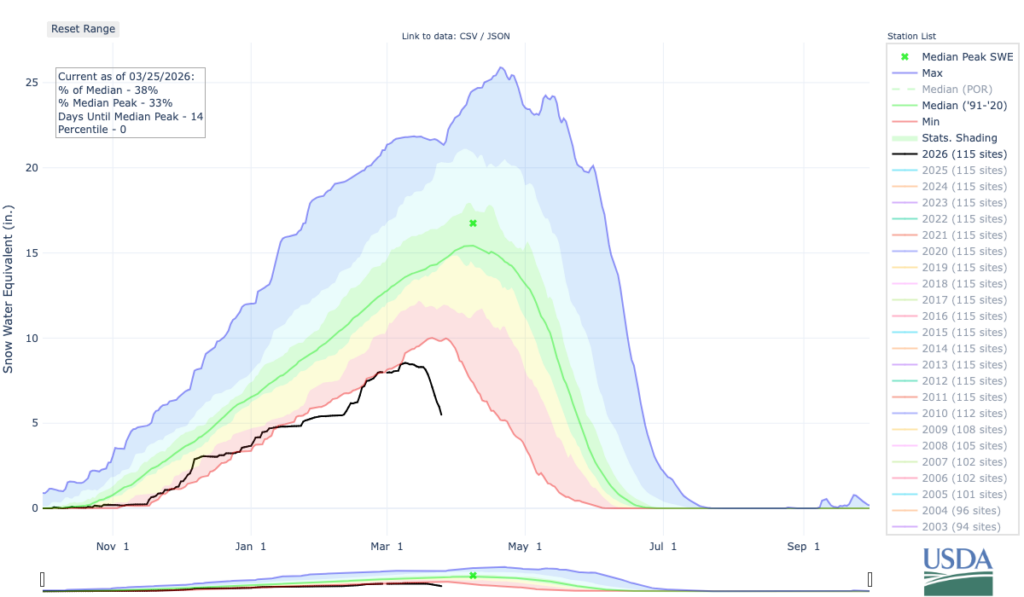
Statewide snow water equivalent based on the SNOTEL network as of March 25. From NRCS
I don’t mean to drag you into the weeds, but currently, the statewide snowpack is sitting around 38% of where it historically should be. Many resorts have closed, peak snowpack having come and gone. Every major river basin in the state is running far below average, with 77% of the active SNOTEL stations reporting their lowest values ever.
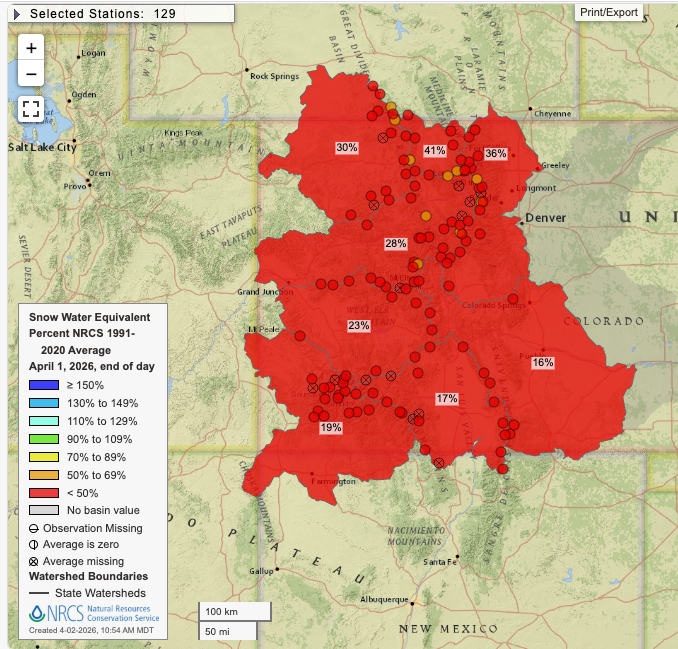
From NRCS
Every day, I read some new horrific headline about the Colorado River. How it’s going to dry up. How millions of people are going to go without water. So when I cross the concrete bridge into town over the Colorado, I look at her withering shores and say an inadequate prayer.
I also pass the confluence of the Gunnison and Colorado rivers whenever I drive to the barn to see Tex. Considering the town is named for this “Grand Junction” between the two rivers, you would think the confluence might be more holy. Marked with an obelisk, perhaps. There is instead a latticed steel truss that crosses the water and a triangular nub of shrubs that can be seen off the industrial highway corridor that runs along the river’s edge.
How long before the site will be marked with a gravestone?
When idiots propose solutions to the West’s water woes—like building a $40 billion desalination plant in California and pumping water back into the Colorado River—I am all the more compelled to sit with the river as she trickles by so that together we can laugh at the schemes capitalists craft. They dream of endless productivity while rubbing their greasy little hands together.
Me and the river dream of something else entirely.
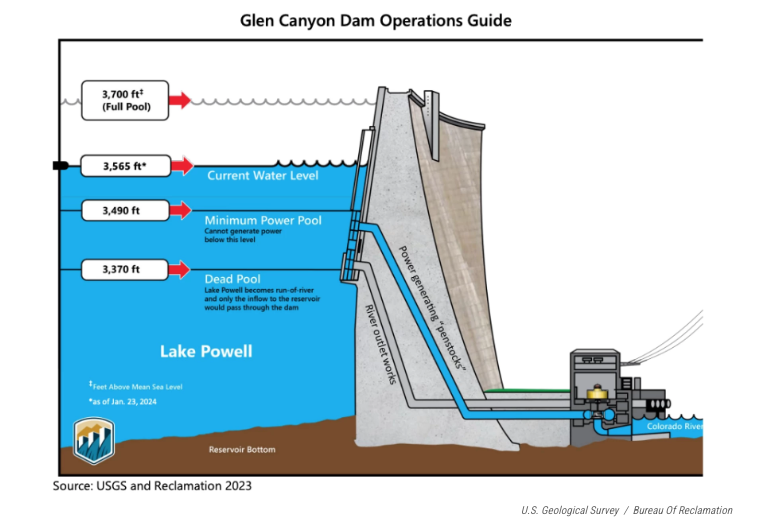
The Lake Powell reservoir (fed by the Colorado River) could get so low this year that Glen Canyon Dam will stop producing hydropower (minimum power pool)—the last step before the water level dips below the dam’s remaining outlets (dead pool). If the seven states of the Lower Basin and Upper Basin can’t reach consensus this summer, DOI will step in with a federal plan for water cuts by an October 1 deadline.
When dead pool status arrives, and Lake Powell becomes a stagnant water trough, 27 million people in the Lower Basin will have their water involuntarily cut. There won’t be a Colorado River below Glen Canyon Dam unless they start drilling a new outlet at the base of the dam immediately to drain the dead pool.
And yet.
Already, 100,000 acres of Glen Canyon that were once flooded have now been exposed due to the ongoing drought. Cultural sites are revealing themselves. Ecosystems once drowned are returning. While dead pool status would still cause the reservoir to back up nearly 100 miles of Glen Canyon, there are glimmers of a river that could run unbroken through the dam once more.
Amidst death, there is always a chance for rebirth.
Irrigation season has just begun in the Grand Valley. Fields that were crusty and brown last week are already tinged with green. The alfalfa fields will be flooded before long. We will all hook our swamp coolers back up to the water lines.
My neighborhood HOA is already deep in discussions about a new lawn management company that can fix the irrigation issues we had last year, so that everyone gets a green lawn all summer long in the desert. Meanwhile, city officials are begging residents to voluntarily conserve water before conservation becomes mandatory.
It’s bleak. And yet I have a feeling the Colorado River is chuckling to herself, just a little. At least, I hope she is.
‘Oh, these silly humans and their water “rights” and their conviction of endless expansion,’ I imagine her laughing, crows feet deeply carved into the corners of her smiling river eyes.
‘They’ll learn,’ she says. ‘One way or another, they’ll learn.’